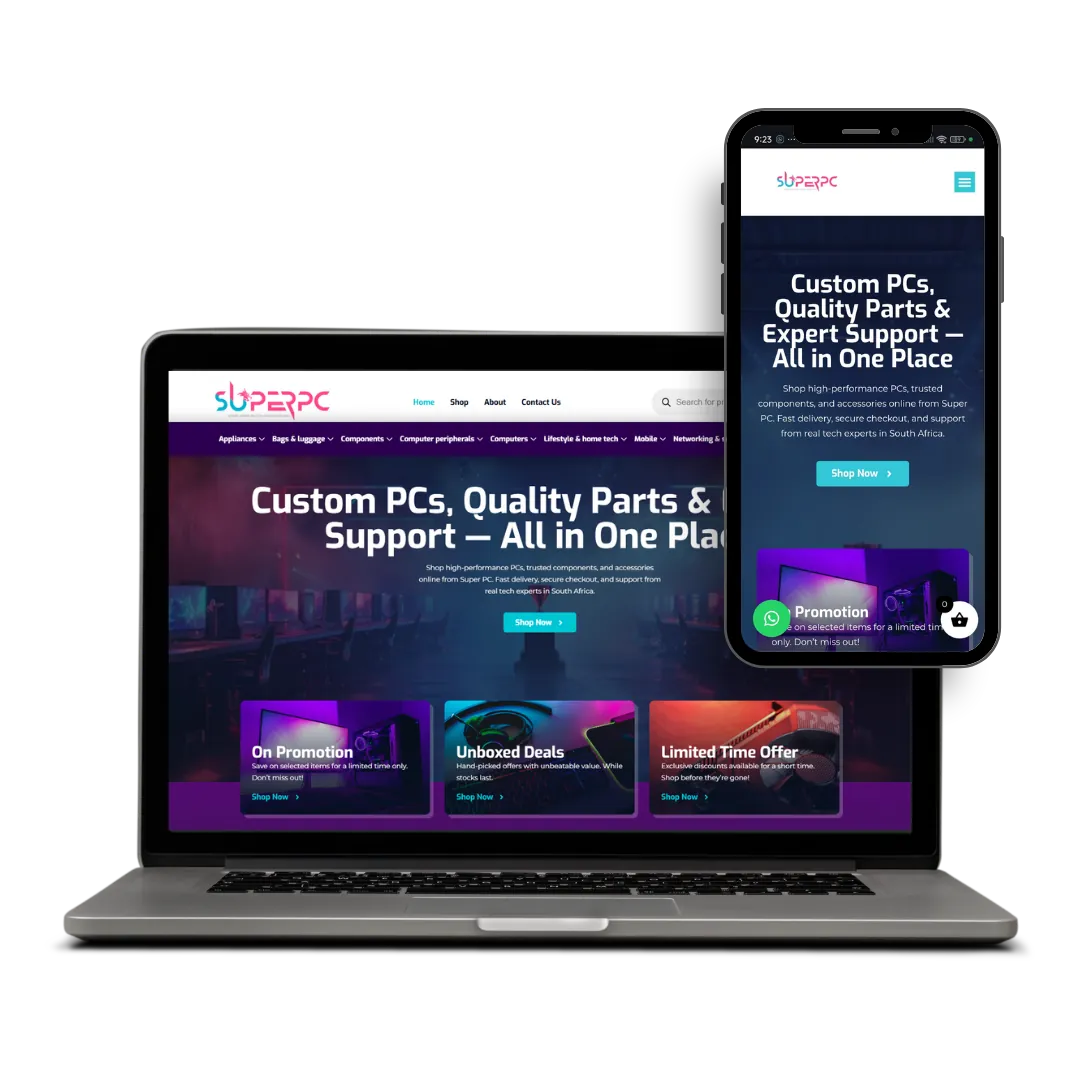
Super PC
An online shop for PCs, PC components, peripherals and technology products, with a cart, checkout and PayFast payments.
Read the Super PC case study Visit superpc.co.za
X3WEB designs and builds custom online stores for established South African businesses. This page explains what a store includes, how products, checkout, payments, shipping and tracking are set up, what it costs and where to see stores we have built.

An X3WEB e-commerce website is a custom-designed online store with a product catalogue, category and product pages, a shopping cart, secure checkout, payment gateway integration and an order-management dashboard. All three store packages share that foundation; the larger two add product feeds and catalogue sync, and the largest adds product photography.
Each store is laid out around your brand and products. Every package also includes:
Each package includes two review rounds and testing on mobile, tablet and desktop before launch. For websites that do not sell online, our South African website design guide covers pages, ownership and choosing a provider.
A store is organised as a catalogue: a shop page, product categories and subcategories, and a separate page with its own URL for every product. Customers can search as they type, filter by category, attribute and price, and use breadcrumbs to step back up a level.
Before the build we ask for your product categories and product details, because the categories become the menu, the filters and the category pages that search engines read. Variable products keep options such as size, colour or style on one product page, so customers choose before they add an item to the cart.
Each product page shows the images, price, description and available options, with an add-to-cart button and a structure built for search. The Standard and Business Professional packages add related products, upsells and cross-sells, sections for featured, new and sale items, a product-enquiry option, a Google reviews display and sales-notification popups.
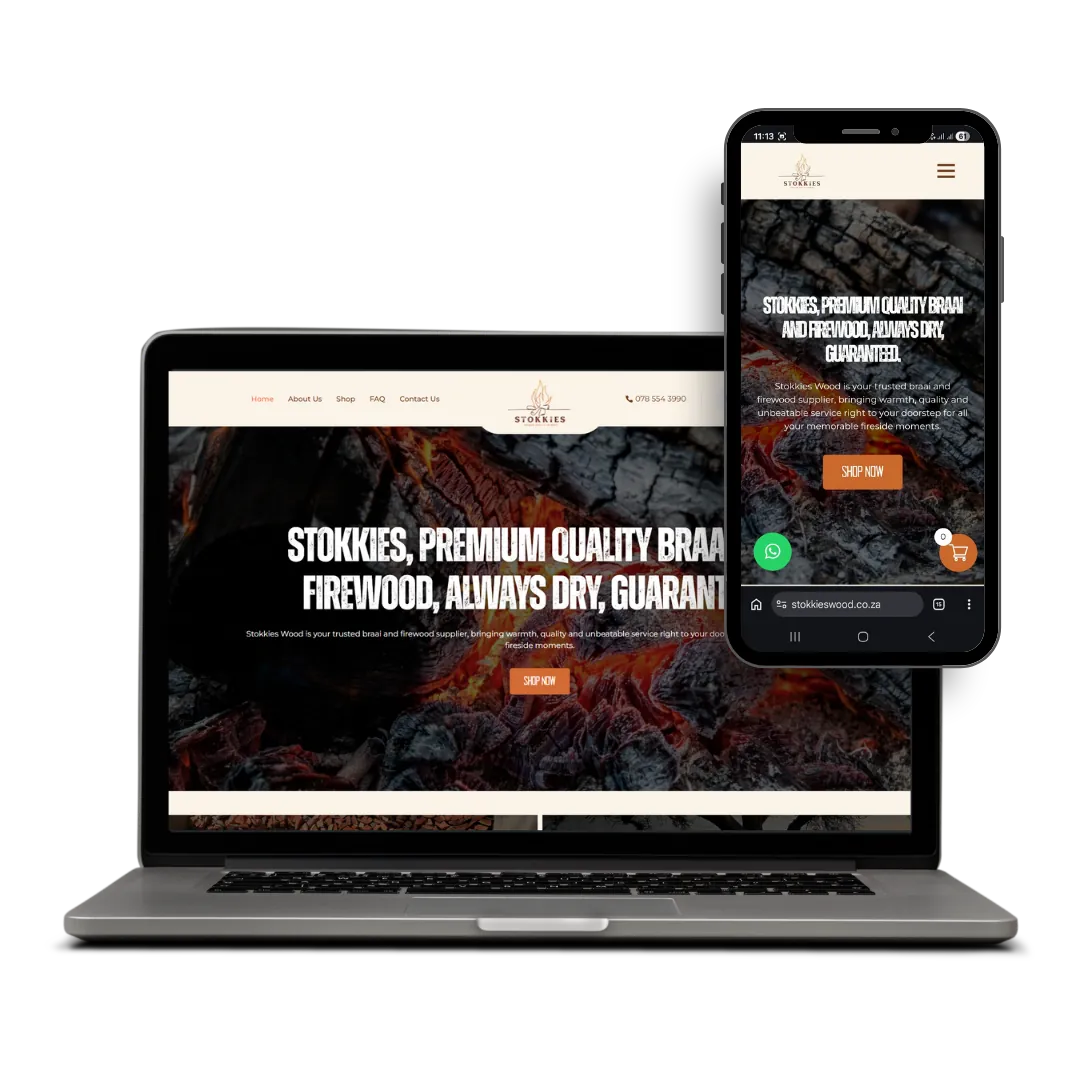
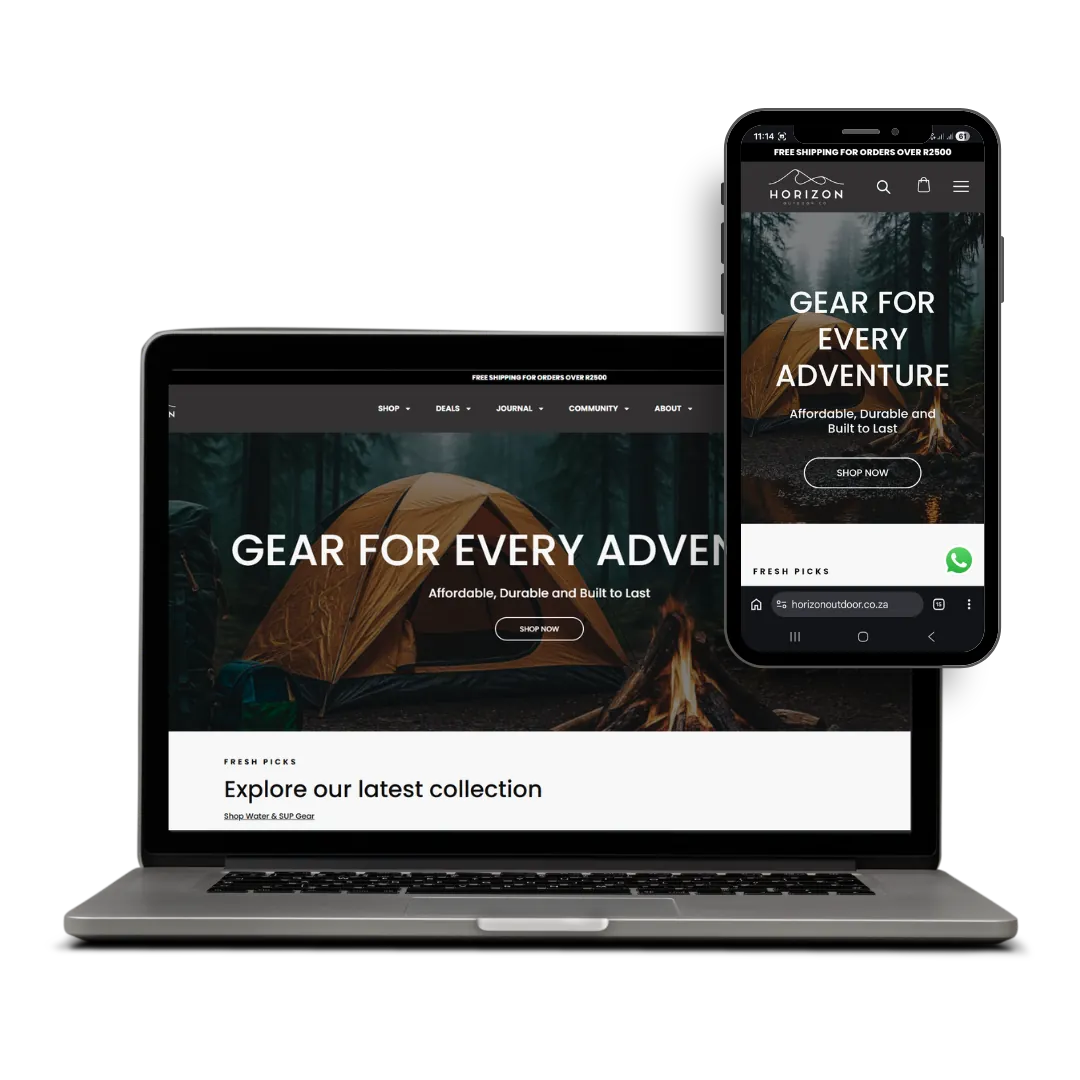
The structure follows the products. Super PC's computer hardware shop uses nested categories with category and brand filters. Stokkies Wood groups its priced bundles into hardwood, softwood, mix and kindling. Horizon Outdoor's gear store has category pages for water and SUP gear, beach and pool, camping and fishing, plus deals categories for bundles and reduced stock.
Checkout connects to an approved payment gateway, so customers pay with the methods that provider supports and the paid order is recorded in your store. In South Africa that can mean PayFast or Yoco, chosen to fit the store and subject to the provider's approval.
Checkout collects delivery details, offers your shipping options, accepts discount codes and allows guest checkout, so nobody is forced to register. Depending on the provider, customers pay by card, EFT or other supported methods. The money goes through the provider to your business, and gateway transaction fees are paid to the provider rather than included in the package price.
Among the stores we have built, Super PC and Stokkies Wood take payments through PayFast, Horizon Outdoor offers card and PayFast payments, and TDMI Training's online course checkout accepts PayFast and manual EFT.
A gateway can look connected and still fail without any error on screen. Our website security checklist for business owners describes a store found days before launch with PayFast still in sandbox mode, and another where customers paid but no order ever showed as paid, because the check on PayFast's payment notifications kept failing. Every X3WEB store package includes cart, checkout and payment-gateway testing before launch. Once you are live, place a small real order yourself and confirm that the money arrives and the order updates.
Weighing a website builder instead? Check gateway support first: our comparison of custom, WordPress and AI-builder websites found Wix listing PayFast only as a feature request when it was written.
Every store package sets up shipping zones, flat-rate delivery, free-shipping rules and a local collection option, with automatic shipping integration where the courier supports it. Courier charges and other shipping costs are not included in the package price.
The Standard and Business Professional packages add weight-based or order-value-based shipping rules where required, and test the shipping rules before launch. Automated courier quotes and tracking depend on what the chosen courier's integration offers, so the courier is confirmed during planning. Every package also includes a Shipping Policy page and a Returns and Refund Policy page.
Stokkies Wood's Gauteng firewood shop answers delivery and pickup questions in its FAQs, while Horizon Outdoor ships across South Africa and shows a free-shipping banner with an order threshold.
Every X3WEB store tracks the core shopping actions (add-to-cart, checkout start and purchase), plus contact-form submissions and WhatsApp and phone clicks, and shows e-commerce analytics in the website backend. The Standard and Business Professional packages add Meta Pixel, product catalogues for Google, Facebook and Instagram, and readiness for Google Ads conversion tracking.
What the two larger packages add:
Readiness means the store is prepared for advertising; it does not include campaigns or ad spend. Google Ads campaign management is a separate service that sets up conversion actions and purchase tracking where applicable. Meta Ads management for Facebook and Instagram covers Pixel configuration, purchase events where applicable and, on the larger packages, retargeting where appropriate. Your ad accounts and pixel data stay in your name; our guide to who owns each part of your website lists what to check.
X3WEB's e-commerce website packages cost R19,930, R24,930 and R39,930, once-off and excluding VAT. Product uploads are quoted according to catalogue size, and hosting, the domain, gateway transaction fees, shipping costs and ongoing store management are extra.
Across the market, store quotes spread widely, because product count and payment setup change the work. Our article on what drives website costs in South Africa notes that large online stores can run past R50,000, and suggests asking every supplier which gateway they will use and how they check that paid orders register as paid.
If you would like the store looked after every month, the E-commerce Website & Management Package pairs a once-off setup fee with monthly management that includes three hours of updates; its current fees and availability are on that page. Hosting can be added from our South African hosting plans, run by our in-house server team with free SSL and, on website hosting plans, daily backups kept for 30 days. Full inclusions are on the e-commerce website packages page.
X3WEB has built online stores for South African businesses selling computer hardware, braai wood, outdoor gear and electrical training courses. Read the case studies for Super PC, Stokkies Wood, Horizon Outdoor and TDMI Training.
An online shop for PCs, PC components, peripherals and technology products, with a cart, checkout and PayFast payments.
Read the Super PC case study Visit superpc.co.zaAn online shop for braai wood and firewood bundles delivered in Gauteng, with ordering, cart and checkout.
Read the Stokkies Wood case study Visit stokkieswood.co.zaAn online shop for paddle boards, fishing tackle, camping gear and beach products, with a journal and community gallery.
Read the Horizon Outdoor case study Visit horizonoutdoor.co.zaAn online course shop for an electrical training provider, with course pages, cart and checkout, student logins and a blog.
Read the TDMI Training case study Visit tdmi.co.zaCompare the packages, or tell us about your business and we’ll recommend the one that fits.
We’ll get back to you within 1 business day.