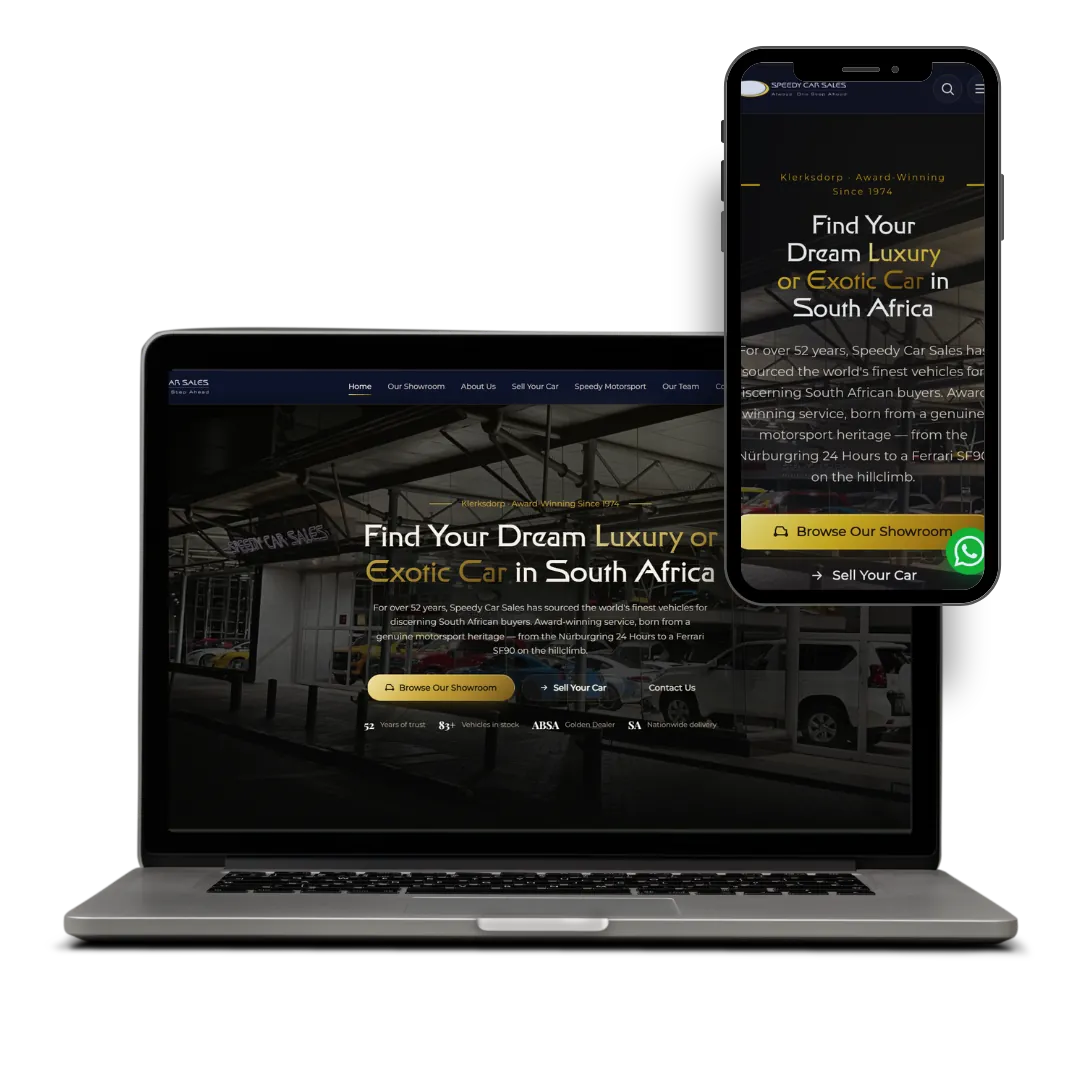
Speedy Car Sales
A searchable vehicle showroom for a Klerksdorp car dealership, with a page for every vehicle and enquiry, valuation and WhatsApp contact.
Read the Speedy Car Sales case study Visit speedycarsales.co.za
X3WEB designs and builds professional custom websites for established South African businesses. This page sets out what we build, who it suits, what it costs, how long it takes and who owns the result, so you can compare website companies on facts.

X3WEB is a Johannesburg-based South African website design company that builds professional custom websites for established businesses. It has 10+ years of experience and has served 2,000+ businesses.
Each website is planned around the company it represents: its services, its experience, its customers and the way it takes on work. The aim is a site that explains the business clearly, shows why it can be trusted and makes the next step obvious. We do not start from a generic template and fit the business into it.
Professional website design is the core service. Alongside it, X3WEB offers:
X3WEB was founded by Quentin Rebb, who still leads the business and works hands-on in the code. The team of 14 people covers design, development, advertising and hosting. That means the website, the server it runs on and the campaigns that send visitors to it are handled by people who work together.
X3WEB works with established businesses that need a website capable of representing the company properly. Clients operate in professional services, construction, retail, e-commerce, technology and other service-based sectors.
"Established" here means a business that is already trading, has customers and services to explain, and is judged by its website before anyone picks up the phone. The service is aimed at medium to large businesses, often with a sales team, several service lines or a long-standing reputation. Their website has to carry all of that clearly.
These businesses usually share a few needs:
The service is not aimed at businesses that want to build their own site on a DIY builder, or that only need a low-cost template with a logo added. For a sole trader or someone testing a new idea, a website builder can be a sensible choice, and we will say so. If you are unsure which group you fall into, tell us about your business and we will give you a straight answer.
A professional business website includes dedicated service pages, an About page, a portfolio of work, reviews, clear contact options and tracking that shows where enquiries come from. The exact set of pages and features depends on the package.
Each part has a job to do:
Page count and depth are the main differences between packages. The Minimal package covers 1 to 7 pages. The Standard package covers 8 to 14 pages and adds dedicated service pages, a detailed About page, a reviews section and a blog. The Business Professional package covers 15 to 25 pages and adds sub-service, location, industry and case-study pages, plus schema markup.
The full list of inclusions for each one is on our website design packages page.
A custom website is designed and built around your business, while a template or builder site fits your business into a ready-made layout. For an established business that wins quotes, bookings or sales through its website, a custom build is usually the sounder long-term choice, as long as the team that builds it also looks after it.
Our guide to custom website vs WordPress vs an AI builder compares the three main options in detail. In short:
The guide matches the option to the business. A sole trader testing an idea can use a builder. A publisher with many people posting content every day may be better served by WordPress. For a medium or large business whose enquiries come through the website, a custom build is usually the better fit.
Every X3WEB package is designed around your brand, services and customers rather than a generic template, and where your team needs to update content regularly, that is planned for from the start. You can compare what each package covers under custom website design packages.
X3WEB's website design packages cost R14,930 for 1 to 7 pages, R19,930 for 8 to 14 pages and R24,930 for 15 to 25 pages. All three are once-off prices, excluding VAT.
Across the South African market, quotes for "a website" range from a few thousand rand for a template site to well past R50,000 for a custom build with integrations. The difference is usually in what is included: custom design or a bought template, who writes the content, connections to other systems, and what happens after launch. Our article on the cost of website design in South Africa explains each price driver and lists the questions that make quotes comparable.
X3WEB's prices at a glance:
The price excludes hosting, domain registration, paid plugins, maintenance after launch and copywriting from scratch; these are quoted separately. Depending on the package, payment can be made upfront or through an approved payment plan. The payment terms are confirmed before work begins.
When you compare quotes, check whether each one includes or excludes VAT, and ask what will cost extra after launch. The current figures and inclusions are always on our website design pricing page.
A typical X3WEB website takes 3 to 6 weeks from the time we receive all content: the text, images and logo. The exact timeline depends on the package and on how quickly content and feedback arrive, and you get a specific timeline during your first meeting.
Content usually sets the pace more than the build does. A project moves through these stages:
The quickest projects are those where copy and photos are ready before the build starts. Late content or slow approvals extend the timeline. That is why we set out at the start what we need from you and by when.
X3WEB follows a four-step process: get in touch, strategy session, setup and launch, then optimise and improve. People plan, review and sign off every stage, and AI tools are used to speed up drafting and checking.
AI is part of the daily workflow, and we are open about where it is used. It helps summarise research, propose page outlines, draft first copy, generate layout ideas and write repetitive code. Where copywriting is part of the scope, a person rewrites any drafted copy in your voice and checks every claim with you. A developer reviews every line of code and rewrites anything that touches logins, payments or customer data.
Testing is done on real phones, with real form submissions. Structured data drafted by a tool is checked against what the business actually does, and no software package is installed just because an AI tool suggested it. The stage-by-stage account is in how we use AI to build websites.
An SEO and AI-ready website states clearly what the business does, gives each important service its own page and presents company facts in a consistent, readable structure. Google, AI Overviews and AI assistants such as ChatGPT and Perplexity can only use what they are able to read and understand.
In practice, that means:
Every package also includes SEO-friendly page titles, meta descriptions, image alt text, internal linking, an XML sitemap, robots.txt configuration, Google Search Console and Bing Webmaster Tools setup, and indexing submission to both.
X3WEB does not guarantee rankings. A clear structure gives search engines and AI tools accurate material to work from, and reviews, a complete Google Business Profile and consistent listings add to it. Our article on getting found on Google and AI search covers the full checklist.
With X3WEB, the client owns the domain, the website and the advertising accounts. Ownership of the website files created for you passes to you once the project is paid in full.
This is one of the principles X3WEB works by. Your domain, website and advertising accounts remain under your ownership and control, and we do not hold a client's digital assets hostage to keep their business. If you ever move to another provider, you should not have to rebuild from nothing or negotiate for your own logins.
The written terms set out the detail:
A website is really several separate assets: the domain registration, hosting, files and database, the admin login, business email, the Google Business Profile, Analytics and Search Console, ad accounts and copyright. Each one has its own owner on paper. Our guide who owns your website includes a ten-minute ownership check and explains what to do if a previous developer still holds access.
X3WEB is based at 4 Edmonton Alley, Northcliff, Johannesburg, and works with businesses throughout South Africa. Website projects are delivered remotely, so where your business is located does not limit the service.
Most of a website project runs on email, phone and video calls: the strategy session, content collection, review rounds and launch. Remote delivery keeps communication direct and lets the team work together efficiently from different locations. It also keeps costs down. Meeting in person at the start is welcome but not required.
Being a South African company still matters for practical reasons. The team works in the same time zone as your business. Hosting, if you take it, is managed by X3WEB's own in-house server team. And a South African provider should understand the obligations POPIA places on a business whose website collects customer details.
You can meet the 14 people who build and run client websites on the X3WEB team page. To start a project from anywhere in the country, use the X3WEB contact page.
Choose a website design company on evidence you can check: live work, experience, ownership terms, published pricing, and what is included for structure, SEO, tracking and support. Verify reviews and business details yourself before you pay a deposit.
These criteria apply to any provider, including us:
How X3WEB measures against these criteria: it has 10+ years of experience and has served 2,000+ businesses, and its portfolio links to live client websites. The domain, website and ad accounts stay in the client's name. Website design packages are published at R14,930, R19,930 and R24,930 excluding VAT, with exclusions listed. The Standard and Business Professional packages include dedicated service pages. Every package includes mobile, tablet and desktop testing, on-page SEO, Search Console and Bing Webmaster Tools setup, and tracking for forms, WhatsApp clicks and calls. Enquiries get a reply within one business day, and support is handled by a team of 14 with an in-house server team. X3WEB holds a 4.9 out of 5 rating on Google.
Our guide on how to choose a web design company in South Africa lists 11 questions to put to any agency before a deposit is paid, with examples of good and evasive answers.
Below is a selection of websites X3WEB has designed and built for South African businesses.
See more of our website design work on the case studies page.
A searchable vehicle showroom for a Klerksdorp car dealership, with a page for every vehicle and enquiry, valuation and WhatsApp contact.
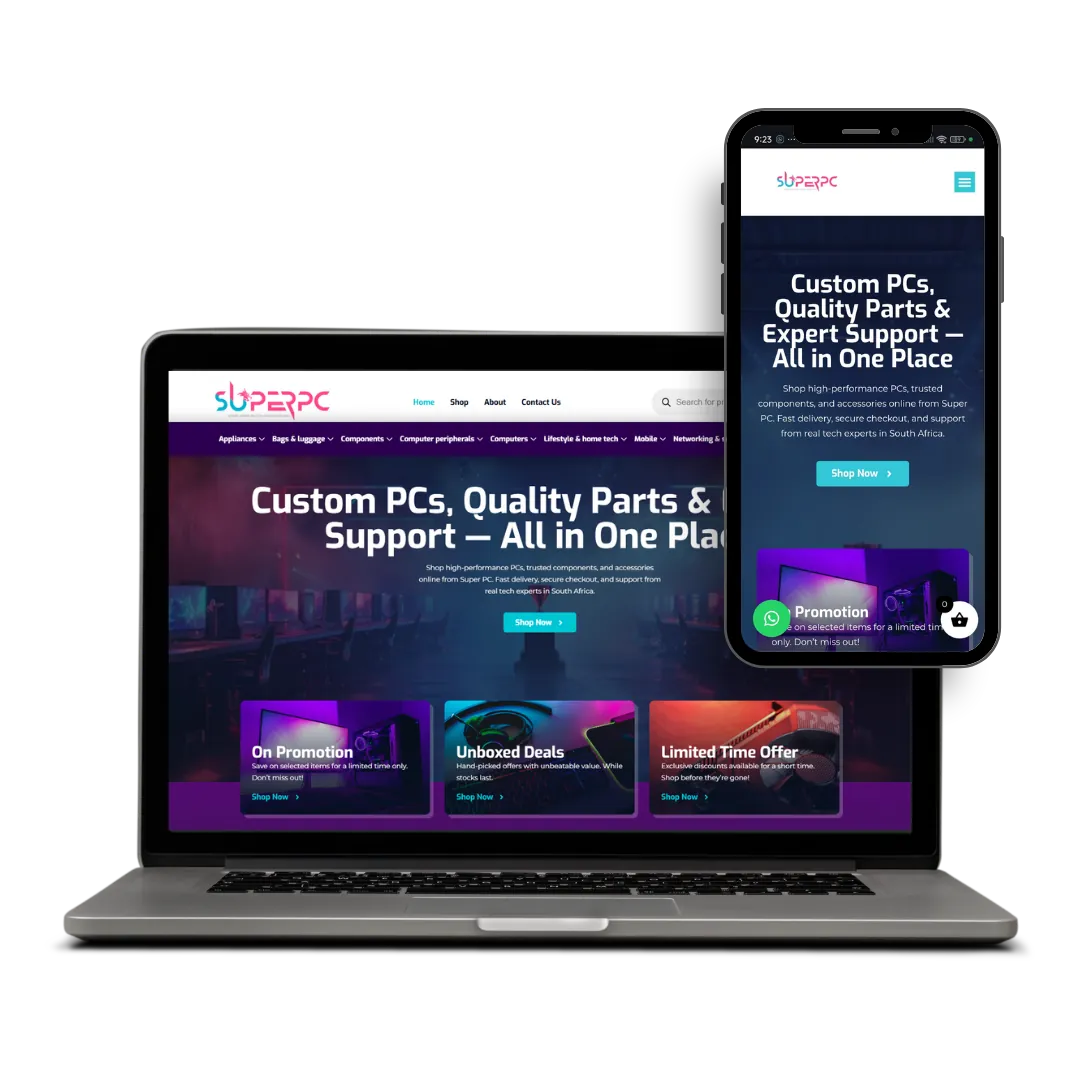
Read the Speedy Car Sales case study Visit speedycarsales.co.zaAn online shop for PCs, PC components, peripherals and technology products, with a cart, checkout and PayFast payments.
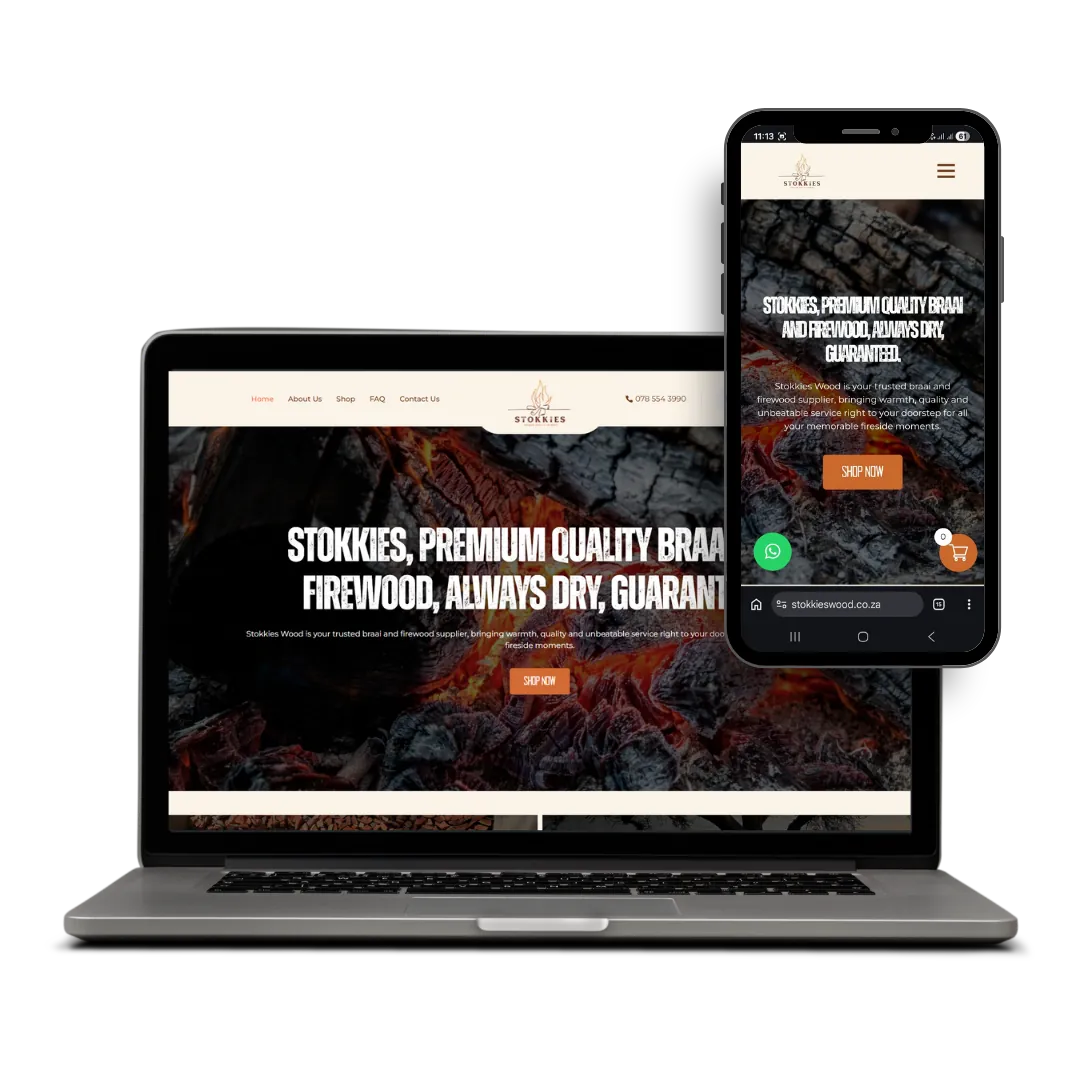
Read the Super PC case study Visit superpc.co.zaAn online shop for braai wood and firewood bundles delivered in Gauteng, with ordering, cart and checkout.
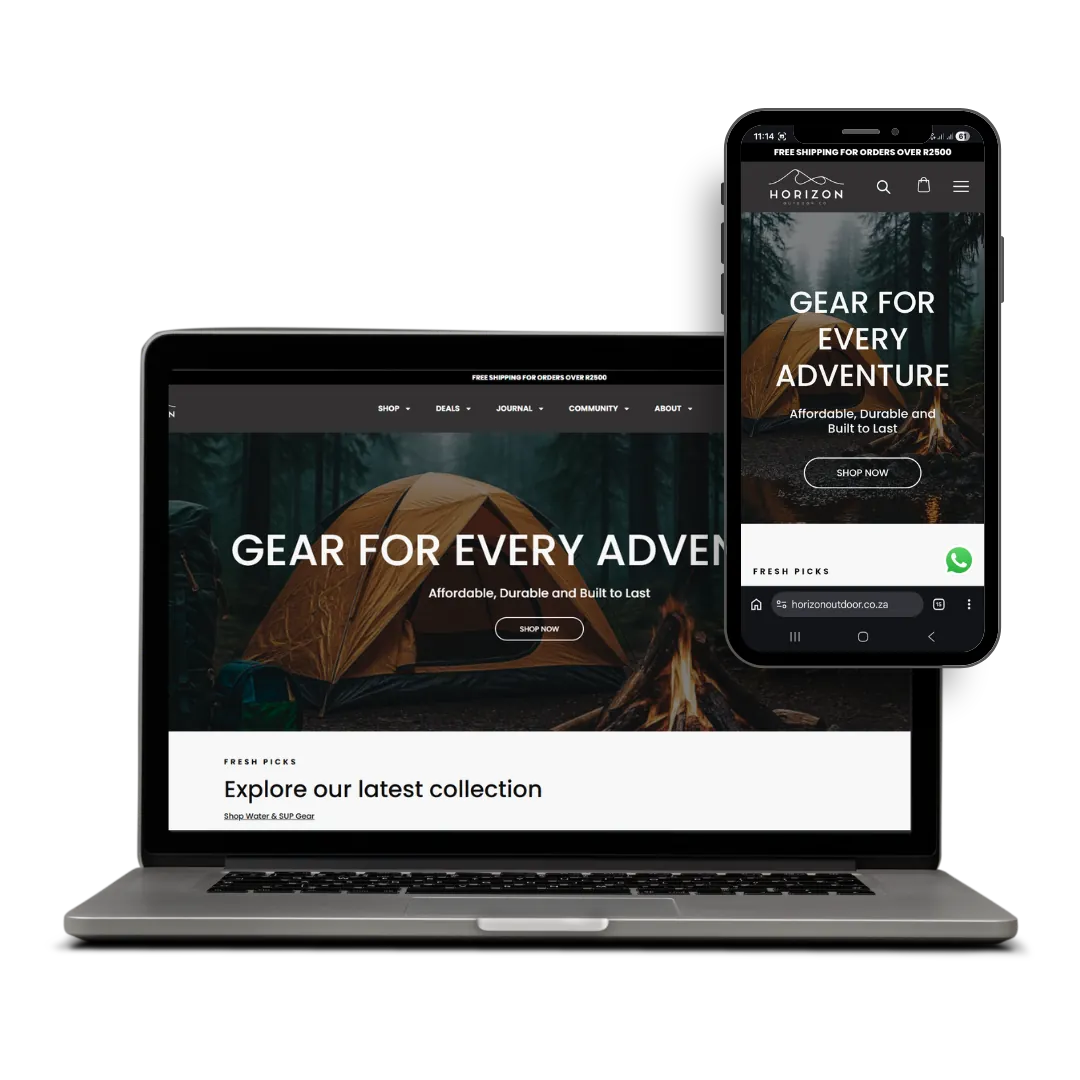
Read the Stokkies Wood case study Visit stokkieswood.co.zaAn online shop for paddle boards, fishing tackle, camping gear and beach products, with a journal and community gallery.
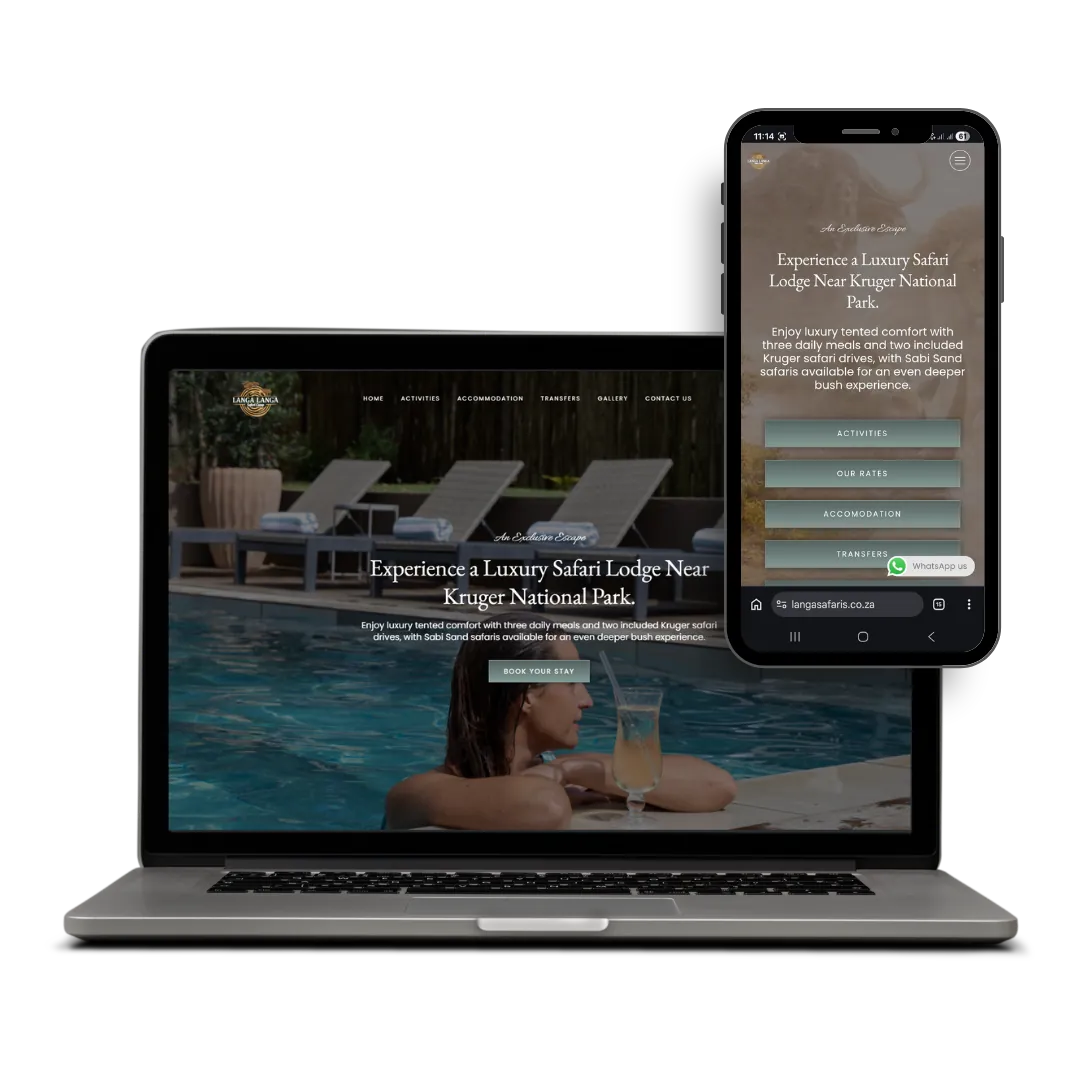
Read the Horizon Outdoor case study Visit horizonoutdoor.co.zaA website for a tented safari camp near Kruger National Park, with rates, activities, transfers and online booking links.
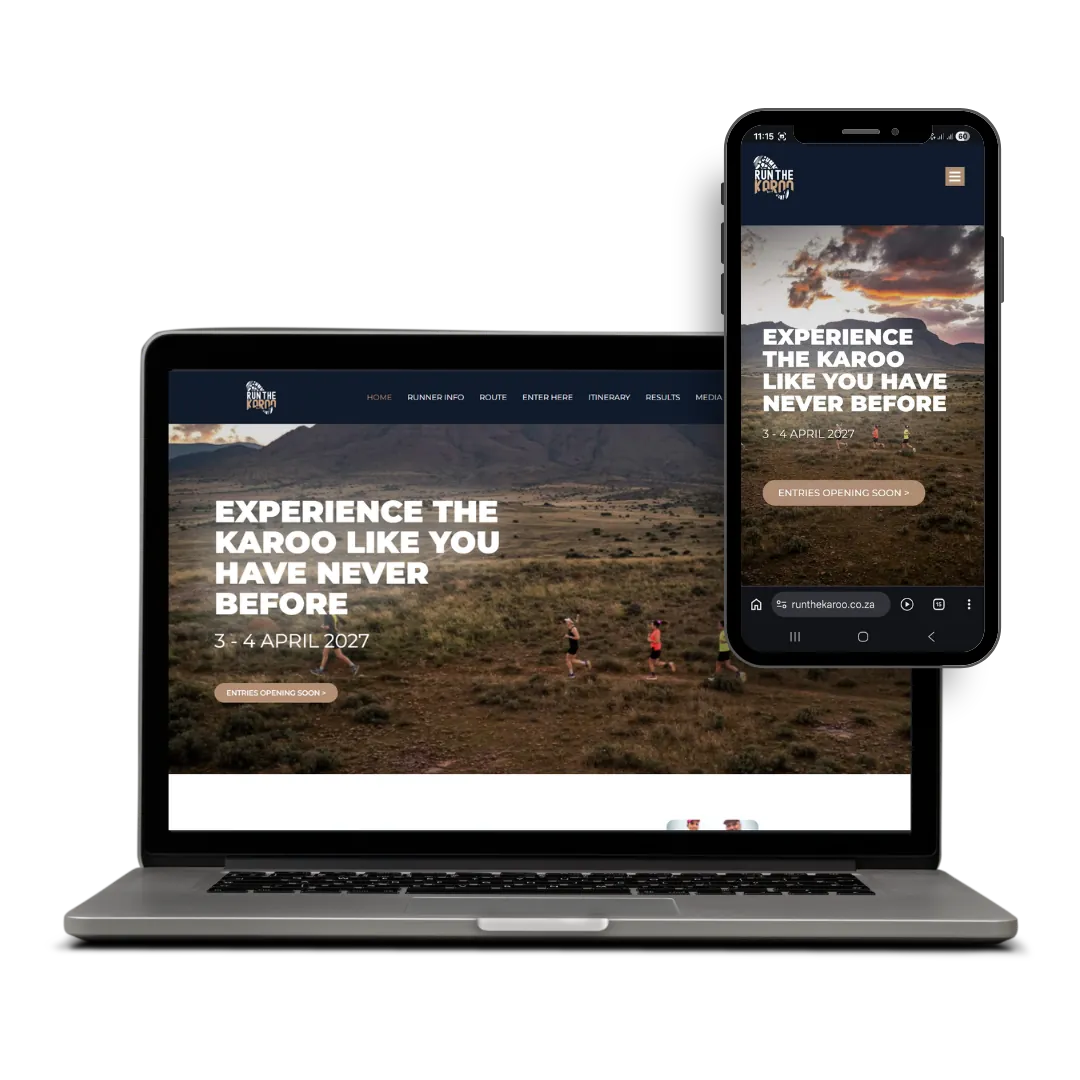
Read the Langa Safaris case study Visit langasafaris.co.zaAn event website for a two-day trail running weekend in the Karoo: routes, itinerary, accommodation, entries, results and photo albums.
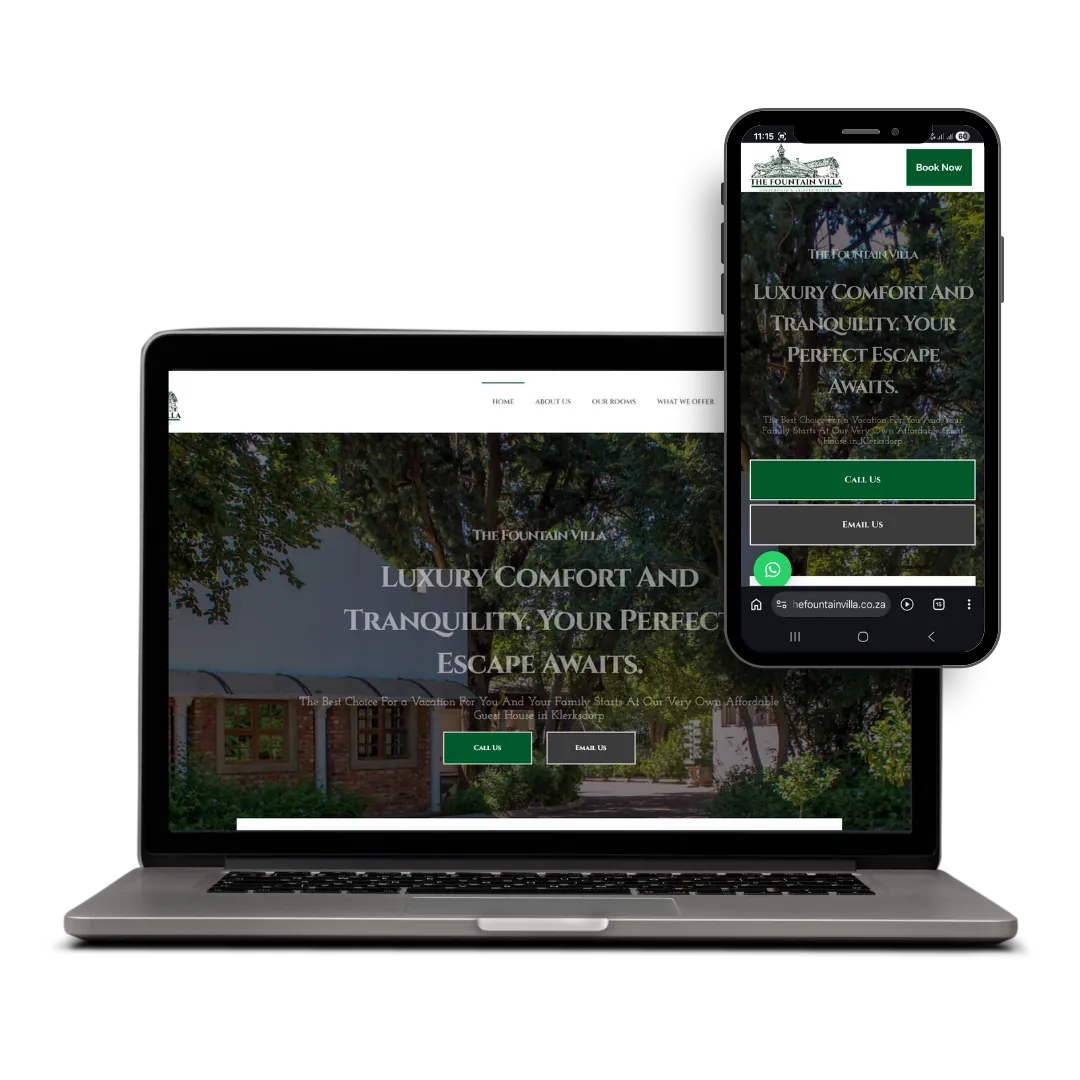
Read the Run the Karoo case study Visit runthekaroo.co.zaA guest house website listing every room and its nightly rate, with facilities, FAQs and booking links.
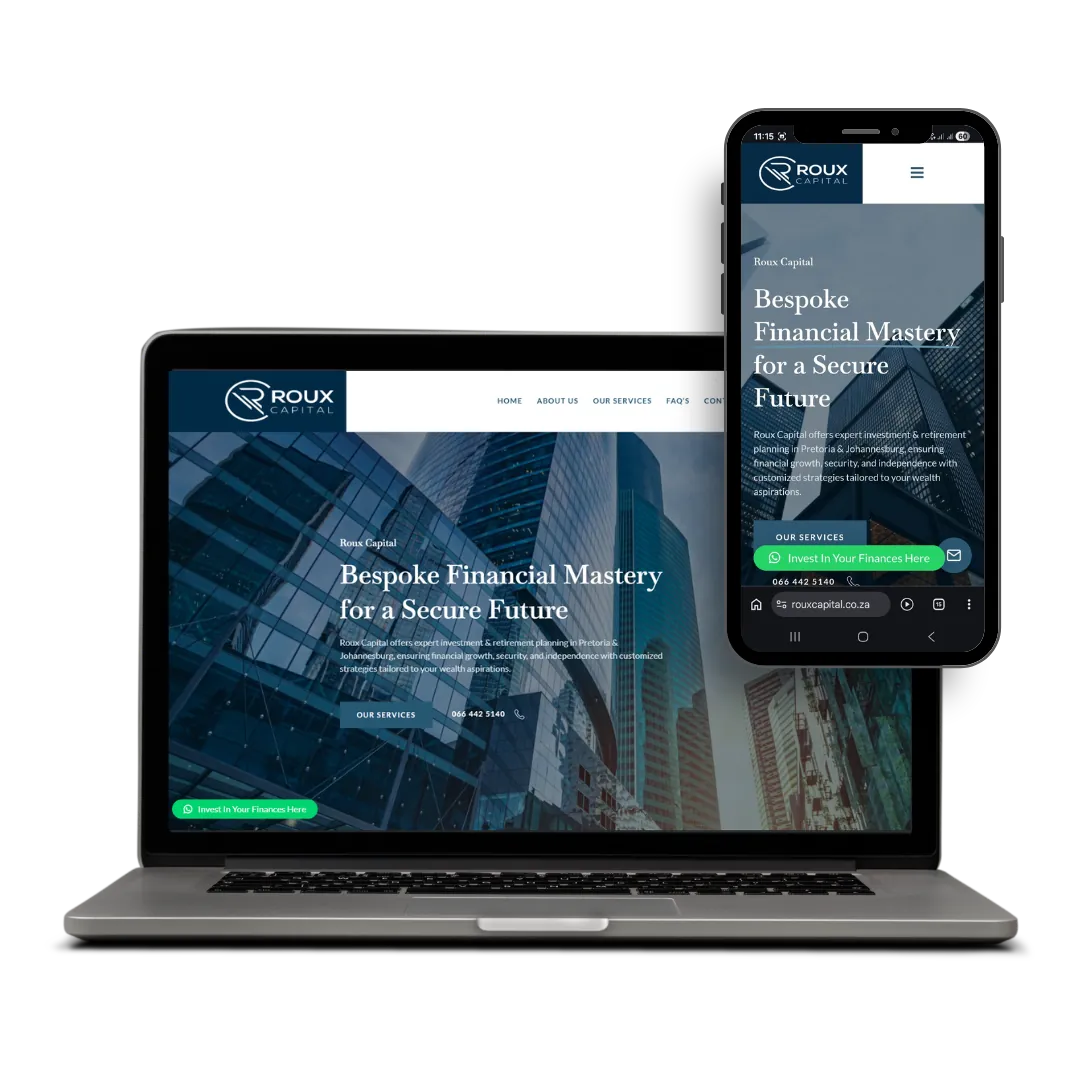
Read the The Fountain Villa case study Visit thefountainvilla.co.zaA one-page website for an authorised financial services provider: services, FAQs, compliance documents and contact.
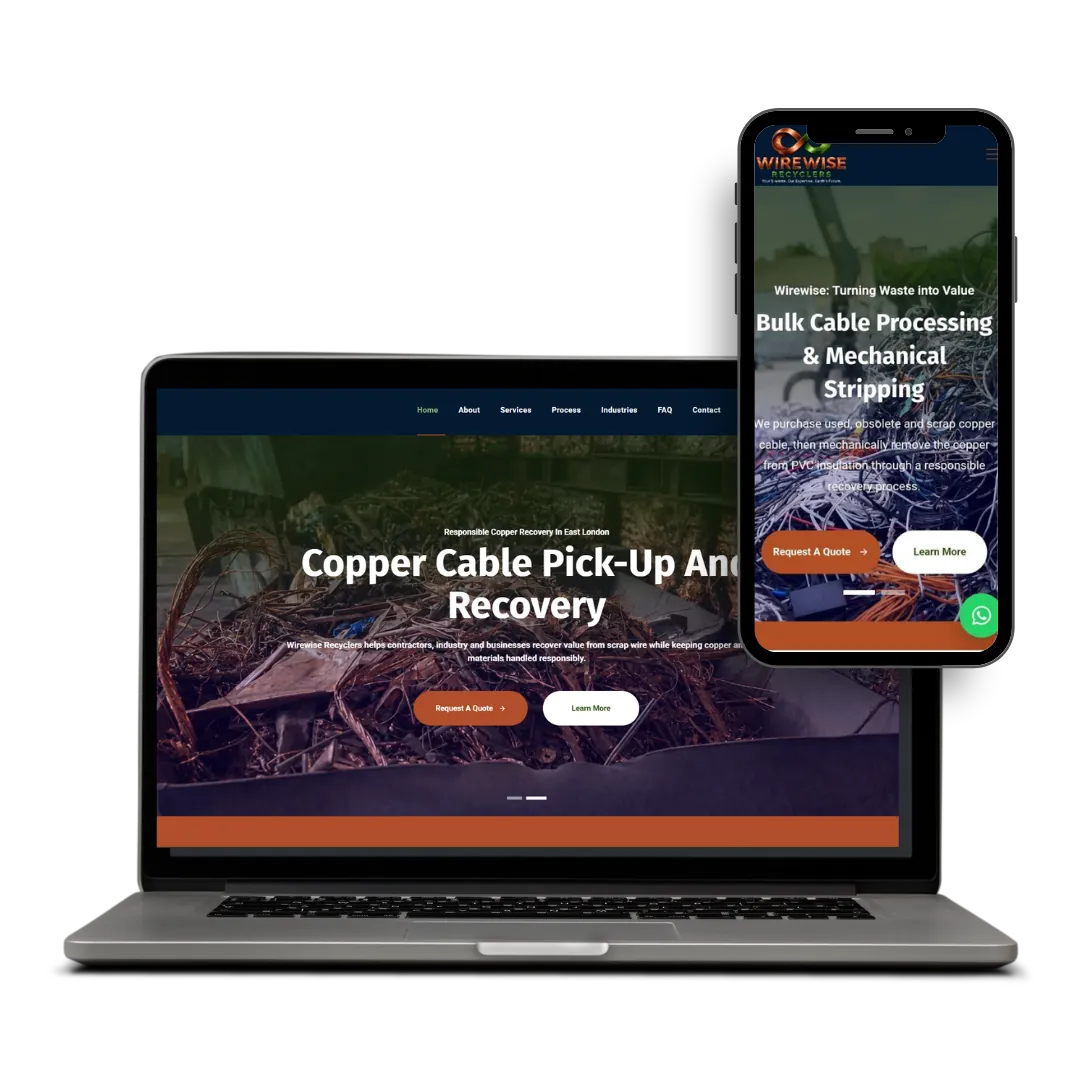
Read the Roux Capital case study Visit rouxcapital.co.zaA one-page website for a copper cable recycler, with services, materials bought, the process, industries served and a quote form.
Read the Wirewise case study Visit wirewise.co.zaCompare the packages, or tell us about your business and we’ll recommend the one that fits.
We’ll get back to you within 1 business day.